
Well-being for employees with the help of a short-term psychotherapy service
A few years ago, the city of Pori became aware of the number of sickness absences of its personnel, which had been on a quite high level for a longer periof of time. Absences due to mental health issues in particular were already on the rise before the Covid-19 pandemic era, so the city started looking for ways to change the situation.

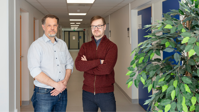
– There were absences due to mental health issues in all our professional groups, but perhaps slightly more than others in socialwork & healthcare and early childhood education workers. The symptoms had also increased in office work. The reasons were certainly the work load and the increase in the amount of work, as well as the management of one's own work and the related challenges for remote workers. It is also noteworthy that there were mental health absences in almost all age groups of the personnel – both the more experienced and those in the early stages of their careers. Relatively, however, the most in the 20–29 age group, which is also a national trend, Riikka Hemmi, Head of occupational well-being in the city of Pori, describes the initial situation.
Reducing mental health absences with short-term psychotherapy and supervisors coaching
Mental health challenges cause very long absences, which in turn causes disability costs and exposes to premature disability retirements. To support the employees and to strengthen the city's working community and to manage mental health absences, the city of Pori developed its operating models and cooperation with occupational health. Terveystalo's short-term psychotherapy, which can be accessed even before there is a need for sickness absence, was a new service taken into use to bring help.
With a referral from an occupational health doctor or psychologist, an employee of the city of Pori receives 10-20 visits to short-term psychotherapy. In addition, employees have access to Terveystalo's preventive mental well-being service Mielen Chat and Mielen Sparri.
– The purpose of short-term psychotherapy is to support and strengthen work and functional ability through jointly agreed working goals. People may have, for example, symptoms of depression and anxiety, burnout, fear or panic symptoms, or problems related to interpersonal relationships, which weaken their ability to cope at work and thus also decrease their work ability. Short-term occupational health psychotherapy can increase psychological well-being and functional ability and reduce experienced psychological symptoms. It is an effective form of treatment. Even if the employee has to be away from work for a while, the starting point of short-term psychotherapy is to support the employee's ability to cope at work, reduce the need for any absence and support the return to work from a possible sick leave", says Terveystalo's regional lead psychologist-psychotherapist Aino Kohtala from Terveystalo.
– Along with short-term psychotherapy and other Terveystalo mental health services, we also started to invest in our supervisors' ability management skills, proactive ability management and early support. We hold training sessions for our supervisors, where we focus, for example, on speaking up: how to talk to employees about situations where their work ability has decreased due to mental health reasons. The supervisors have also received peer support from each other at Teams clinics, where an occupational health psychologist was involved. We have also offered clinic activities to our staff on, for example, sleep, stress management and nutrition, says Riikka Hemmi.
The results tell about the effectiveness
The city of Pori's investment in the mental well-being of its employees has paid off. In 2021, there were 520 days less absences due to mental health reasons than the previous year. After 2020, 324 city employees have used the short-term psychotherapy offered by Terveystalo.
– The good results have been the combined effect of short-term psychotherapy and other mental health services, front-line work and the investments made in the smoothness of the work. The experience of short psychotherapy has been very good. Absences due to mental health reasons have decreased, and we also see that mental health absences that were previously hidden in musculoskeletal disorders have been made visible by their proper name. This way we can talk about them more openly and tackle these challenges, because we know they exist anyway, says Riikka Hemmi.
In connection with the Covid-19 pandemic, mental well-being has been talked about in public and in workplaces even more often, because mental health challenges have increased due to changes in the world.
– People are currently having difficulties both in private life and at work, and this whole thing may take a lot of strength. The aim is to keep short-term psychotherapy as a close working period, and sessions can also be organized remotely. The most important thing is that the treatment can start and the person gets help before sick leave is necessary, continues Aino Kohtala.
– Fortunately, mental health issues are also talked about much more openly at work, and the vast majority of employees encounter them at some point in their lives. As an employer, we have brought up mental health challenges and the services available for them more often than before, which has helped our employees to talk about them more openly. This helps us as an employer to support their work ability even better. I hope mental health challenges are no longer taboo at work either, sums up Riikka Hemmi.
Want to learn more?
More occupational health articles
-
 25.05.2026 | Article
 -
 25.05.2026 | Article


