
How to reduce pharmaceutical waste across hundreds of locations? Terveystalo and Aalto University are looking for answers
During the first half of the year, Terveystalo has collaborated with master’s students at Aalto University to improve the management of pharmaceutical waste and identify ways to reduce avoidable pharmaceutical waste in particular. This collaboration reflects Terveystalo’s continuous improvement processes, its efforts to strengthen environmental responsibility, and its commitment to making the company’s operations more sustainable.
A large network of locations also brings with it a sense of responsibility. Terveystalo has nearly 400 locations across Finland, which inevitably means that pharmaceutical waste is generated at various locations at different times. Pharmaceutical waste is classified as hazardous waste, and its proper handling is significant from both an environmental and a cost perspective. Although practices and reporting regarding medication management are at a high level, the overall picture of pharmaceutical waste generation has not been sufficiently detailed across the entire network.
In a collaborative project, Aalto University students were challenged to increase transparency and detail regarding the generation of pharmaceutical waste, as well as to identify concrete areas for improvement. Particular attention was paid to determining which portion of pharmaceutical waste is essential — such as first-aid medications stored as a precaution — and which portion could potentially be avoided through measures like improved inventory management, documentation, and procurement practices.
During the project, the students familiarized themselves with Terveystalo’s current processes, conducted interviews with internal and external stakeholders, and gained insight into day-to-day operations at Ruoholahti Hospital. In their analysis, they took into account, among other things, the specific characteristics of the extensive network of locations, regulations related to medications, and the realities of inventory management in the healthcare environment.
This collaboration resulted in three concrete proposals for improvement, focusing on enhancing documentation and knowledge management, developing inventory management, and providing more systematic guidance and training on operating models and expertise. The proposals have been drafted to be realistically implementable and to support long-term development efforts.
Even small improvements in pharmaceutical waste management can yield significant environmental and cost benefits across the entire network. This collaboration demonstrated how valuable a fresh perspective and expertise from different fields can be in solving practical challenges.
The collaboration with Aalto University supports Terveystalo’s goal of making healthcare operations more responsible and transparent.
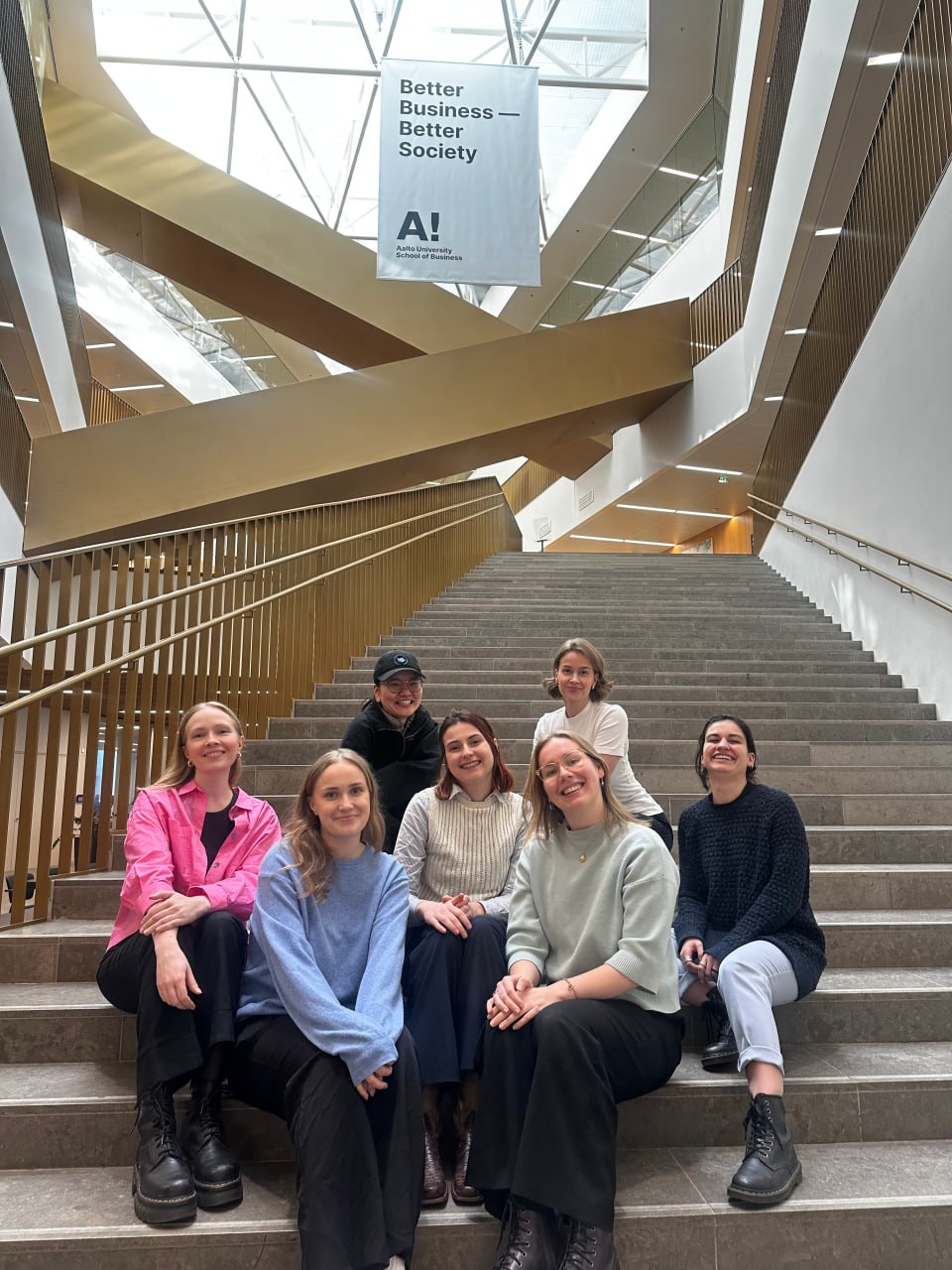
Photo: Aalto University students Amanda Lahtinen, Brynna Justice, Chihiro Yamamoto, Francesca Martini, Karolina Svahn, Louna Pajunen, and Oona Silberg.


