
Circular economy and artificial intelligence boost performance and improve care
At the heart of sustainable healthcare, technology serves as a tool for improving both the quality of care and accountability. Terveystalo favors solutions that combine sustainability, cost-effectiveness, and medical expertise.

The magnetic resonance imaging (MRI) machine at the Tikkurila branch of Terveystalo looks brand new: a flawless white shell, an intuitive user interface, and high-quality results. And that's exactly what it is — except that it's not entirely new. This MRI machine has been thoroughly refurbished by our partner Siemens Healthineers. Instead of replacing the entire machine, carefully selected components and software have been modernized with the latest technology. In MRI machines, for example, the particularly resource-intensive component, the magnetic core, has been left in place, while the parts surrounding it have been updated to reflect today's modern technology and software.
– These upgrades are an excellent practical example of circular economy thinking in our operations. We retain the durable, material-efficient core and replace only what is necessary, combining hardware and software upgrades. This allows us to save valuable resources and materials, reduce CO₂ emissions related to equipment purchases, and maximize performance, says Jarno Suominen, Technology Manager for Medical Devices at Terveystalo.
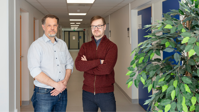
For Suominen, technology is not a value in itself, but a tool. In decision-making, he considers transparent measurability, effectiveness, and the perspectives of customers and staff to be key factors. Jukka Erkkilä, Director of Imaging Services, adds that artificial intelligence is not just a privilege of new systems, but an essential part of sustainable healthcare.
– Recent software updates for MRI equipment utilize artificial intelligence computing that utilizes neural networks, which improves image quality by, among other things, recognizing the contours of tissues and structures to produce more accurate and higher-quality images. Thanks to these updates, the accuracy of MRI diagnostics has improved and imaging times have been reduced, making examinations more comfortable for our customers, says Erkkilä.
For the climate, healthcare, and the future
At Terveystalo, sustainability is strongly linked to our core mission. Our goal is to improve health by building smooth, caring, and effective healthcare that is accessible to everyone. We also strive to reduce the environmental impact of all our activities and promote sustainable healthcare through, among other things, circular economy solutions.
– We evaluate investments from various sustainability perspectives. In medical technology, the circular economy, longevity, and efficiency are the basis of sustainable life cycle thinking. Refurbished equipment and updated systems are smart, sustainable, and medically high-quality solutions that also support our climate and environmental goals, says Kati Kaksonen, Director of Investor Relations and Sustainability at Terveystalo.
It is important to understand that the life cycle of equipment involves more than just recycling components at the end of their technical life.
– More important is how we can extend the life cycle and optimize performance through smart use, maintenance, and updates, Suominen says.
Sustainable technology as a pillar of healthcare
When investment decisions give equal consideration to new systems, refurbished solutions, and upgrades, and make use of smart technologies, it is possible to combine sustainability, cost-effectiveness, and high medical quality.
– Sustainable value creation, responsible use of resources, and high medical quality go hand in hand. Responsibility is not a limitation, but a path to better healthcare, Kaksonen summarizes.
Circular economy in practice at Terveystalo
Read more articles
-
 25.05.2026 | Article
 -
 25.05.2026 | Article


