
This is how technology is revolutionizing healthcare – “The cost-benefit ratio of occupational health is improving even further”
Artificial intelligence not only streamlines but also improves healthcare. It identifies risks and speeds up access to doctors, according to Terveystalo’s digital experts.

AI uses data to identify employees whose work capacity is at risk of declining. They are referred to a healthcare professional, who receives a summary of the most relevant patient information from the AI just before the appointment. Once a treatment plan is in place, the AI helps document it and ensures that the measures fall within the scope of the employer’s occupational health agreement.
This kind of future for occupational health care is already a reality at Terveystalo, says Ilari Richardt, Head of Terveystalo’s Digital Services unit.
AI brings foresight to the core of occupational health
Private healthcare has long set the direction for the digitalization of the entire healthcare sector in Finland. For example, in terms of the number of digital professionals and developers, Terveystalo is already a medium-sized Finnish software company. The products it develops are also widely used in public healthcare.
Until now, many digital healthcare solutions have been electronic versions of traditional medical clinic workflows. However, artificial intelligence opens up entirely new possibilities.
In February, Terveystalo launched a new AI-native patient information system, Terveystalo Ella, where doctors can view, for example, a summary of a patient’s most relevant medical information and issue prescriptions and certificates more efficiently than before.
Above all, society expects artificial intelligence to deliver efficiency gains. According to Veera Siivonen, head of Terveystalo’s Digital Care unit, in occupational health this means that a client’s need for care can be identified more quickly than before, and they can be guided more smoothly onto the right care pathway. The client doesn’t need to know what service they need themselves; instead, digital solutions and AI can help them find the right help right from the start.
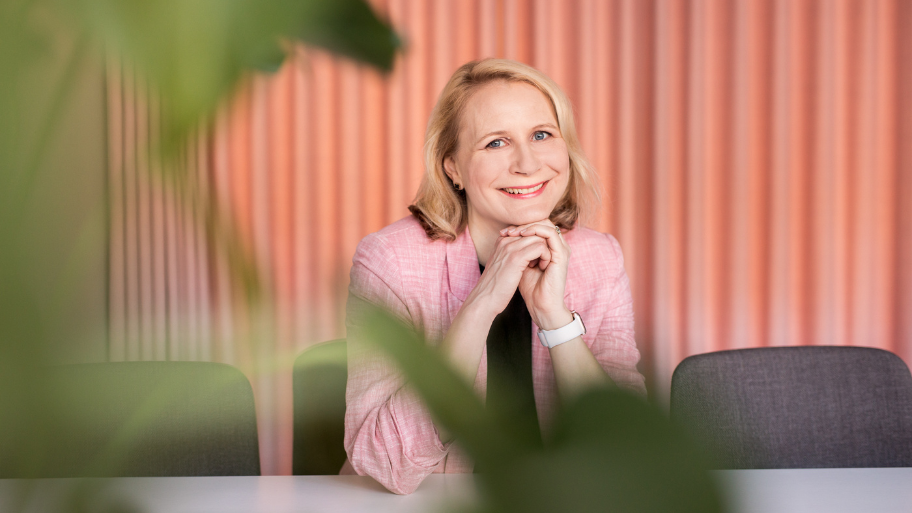
Photo: The care pathway will just become even smoother, predicts Veera Siivonen, head of Terveystalo’s Digital Care unit.
And even though digital services are constantly evolving, employees can still visit a human doctor’s office.
– The care pathway will only become even smoother. For example, in the treatment of obesity, the first appointment may be at a medical center, but after that, care continues digitally, Siivonen explains.
The use of artificial intelligence in routine tasks leads, above all, to better care and a better customer experience.
– When artificial intelligence quickly compiles essential patient data or helps with documentation, the doctor has more time to focus on the patient themselves rather than the computer screen, says Siivonen.
The new-generation digital occupational health platform recently launched for Terveystalo’s customers opens in a new window and provides a view of data from different parts of the organization. The data helps identify teams and employees who are at risk of burnout or whose work ability is at risk of declining.
– Research shows that occupational health already offers a good cost-benefit ratio, but this will increase dramatically once we can make full use of data and more easily target preventive measures, says Ilari Richardt.
Data, data security, and trust are key
Combining artificial intelligence with health data requires special care. Sensitive information must not fall into the wrong hands, nor should it end up as training material for language models.
Terveystalo develops its own software. According to Richardt, this ensures not only high data security but also compliance with Finnish laws and Current Care guidelines in healthcare.

Photo: According to Ilari Richardt, in-house software development ensures high data security and compliance with Finnish legislation.
Understanding Finnish legislation and needs benefits companies in many ways, Richardt explains. For example, the patient information system developed by Terveystalo helps doctors interpret occupational health agreements using artificial intelligence.
– Different interpretations of agreements have sometimes led to billing errors. Now, for example, AI can indicate that a certain follow-up procedure is not covered by the service paid for by the company. Clarity improves significantly, says Richardt.
One of the biggest challenges in healthcare is the fragmentation of data. AI is capable of compiling data from different systems and making sense of doctors’ various notes.
According to Veera Siivonen, it is particularly exciting that, at its best, artificial intelligence can make health data accessible not only to professionals but also to the patient themselves.
– For example, chatting with AI could present a patient’s medical history to the patient in a completely new and understandable way. We implement this securely so that the data doesn’t end up as training data for global AI models, explains Siivonen.
Read more occupational health articles
-
 25.05.2026 | Article
 -
 25.05.2026 | Article


