
Occupational health Therapies at the Forefront – operating model reformed mental health support for staff in Oulu
Mental health and behavioral disorders were a cause for concern in the city of Oulu. Sick leave was on the rise, and the phenomenon was evident not only in statistics but also in the everyday life of work communities. When the Therapies to the Forefront operating model became available for occupational health services, Oulu seized the opportunity. The goal was to build a completely new way of thinking about mental health support and to provide tools for every employee to promote their own well-being and coping. The achievements of the first six months show that the solution was the right one: a 10% decrease in mental health absences is the result of a comprehensive cultural change.

Mental health challenges are not just diagnoses. Even before the first day of absence, they are reflected in coping at work, performance, and affect the atmosphere in the work community.
– We wanted to find a way to support people earlier and more flexibly. After learning about the Therapies to the Forefront operating model, it also became clearer when and whose job it is to help employees with mental health issues, says Anna-Kaisa Puusaari, Wellbeing at Work Manager for the City of Oulu.
The biggest change brought about by the model was in how mental health issues are identified and addressed. When an employee feels they need help, they are guided to assess their own situation and fill out a therapy navigator form.
– For many, the navigator is the first opportunity to stop and think about what is really going on with them. The fact that they describe their symptoms and put their stress into words makes them active participants and triggers their own insights even before any healthcare professional says anything, Puusaari explains.
Many people realize at this stage where to start.
Self-care programs shift the focus to independent work
With the use of the Therapies to the Forefront operating model, Oulu has been able to address mental health issues much earlier. An appointment with an occupational health psychologist is no longer the primary form of support in every situation. Instead, the occupational health care pathway can begin with filling out a navigator form and an initial assessment by an occupational health nurse. The initial assessment may lead to support being provided in the form of guided self-care. This solution has proven to be effective.
– When an employee is first instructed to fill out the therapy navigator and then undergo an initial assessment by an occupational health nurse, a comprehensive picture of the situation can be obtained quickly, and the employee can be referred directly to the specialist best suited to their needs. This ensures that the time of an occupational health psychologist or occupational health physician can be offered to those who need it at the right time. This increases the effectiveness of treatment and ensures that everyone receives both help and support to strengthen their own agency, explains Petteri Hyrynkangas, occupational health physician at Terveystalo.
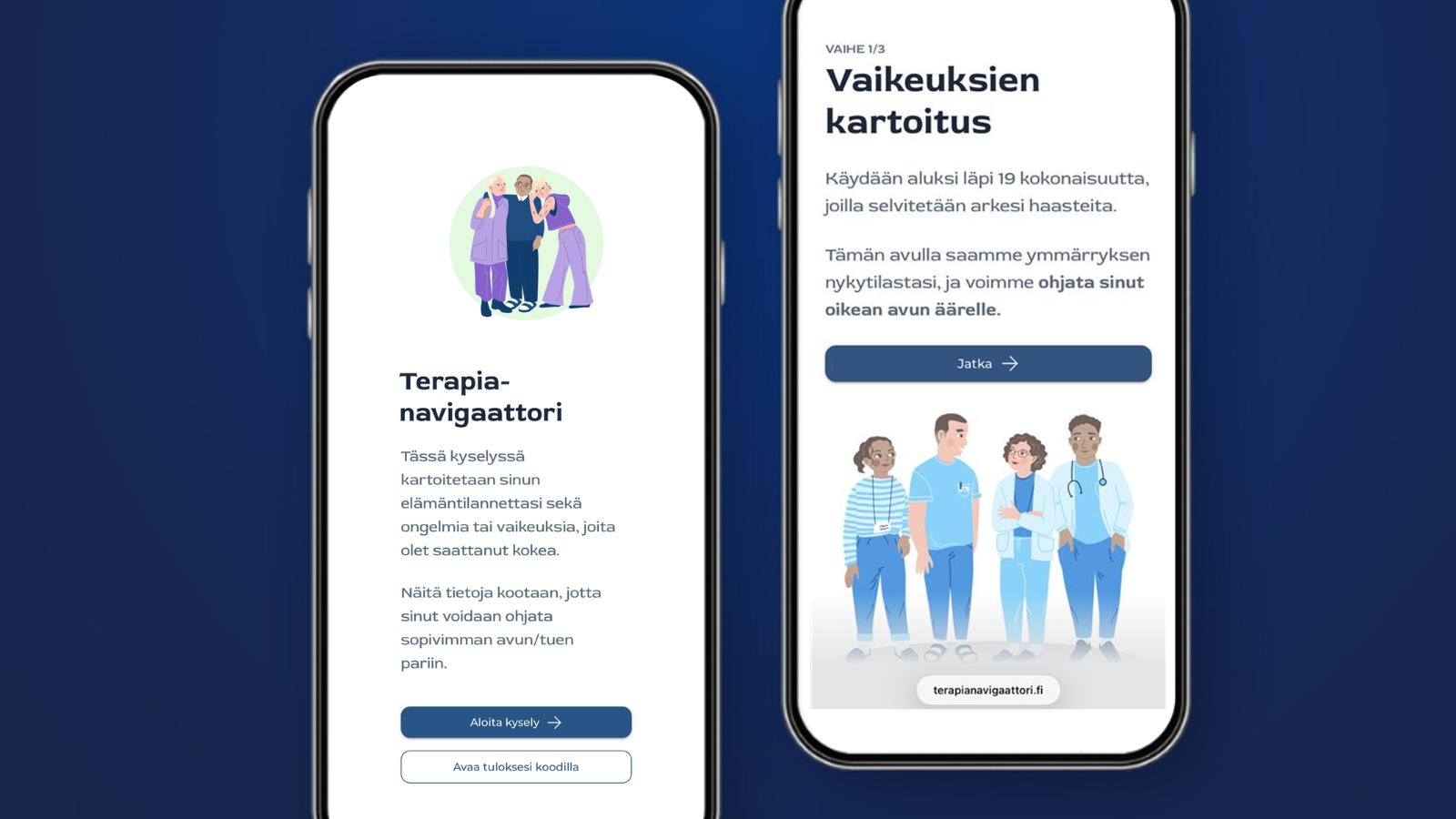
Self-care programs are often the first point of contact for employees seeking support and work well in the early stages of problems. The occupational health nurse helps select the Mental Health Center self-care program best suited to the situation, and follow-up ensures that treatment progresses and that any necessary intensification of treatment is provided. For many, this has also been a relief: the online self-care program and independent work lower the threshold for dealing with one's own feelings.
It is not always possible to sit down with a healthcare professional and talk. Mental health challenges require different forms of support. The navigator helps you to structure your own feelings and gives you the sense that perhaps you are not completely alone with this. ”
Anna-Kaisa Puusaari
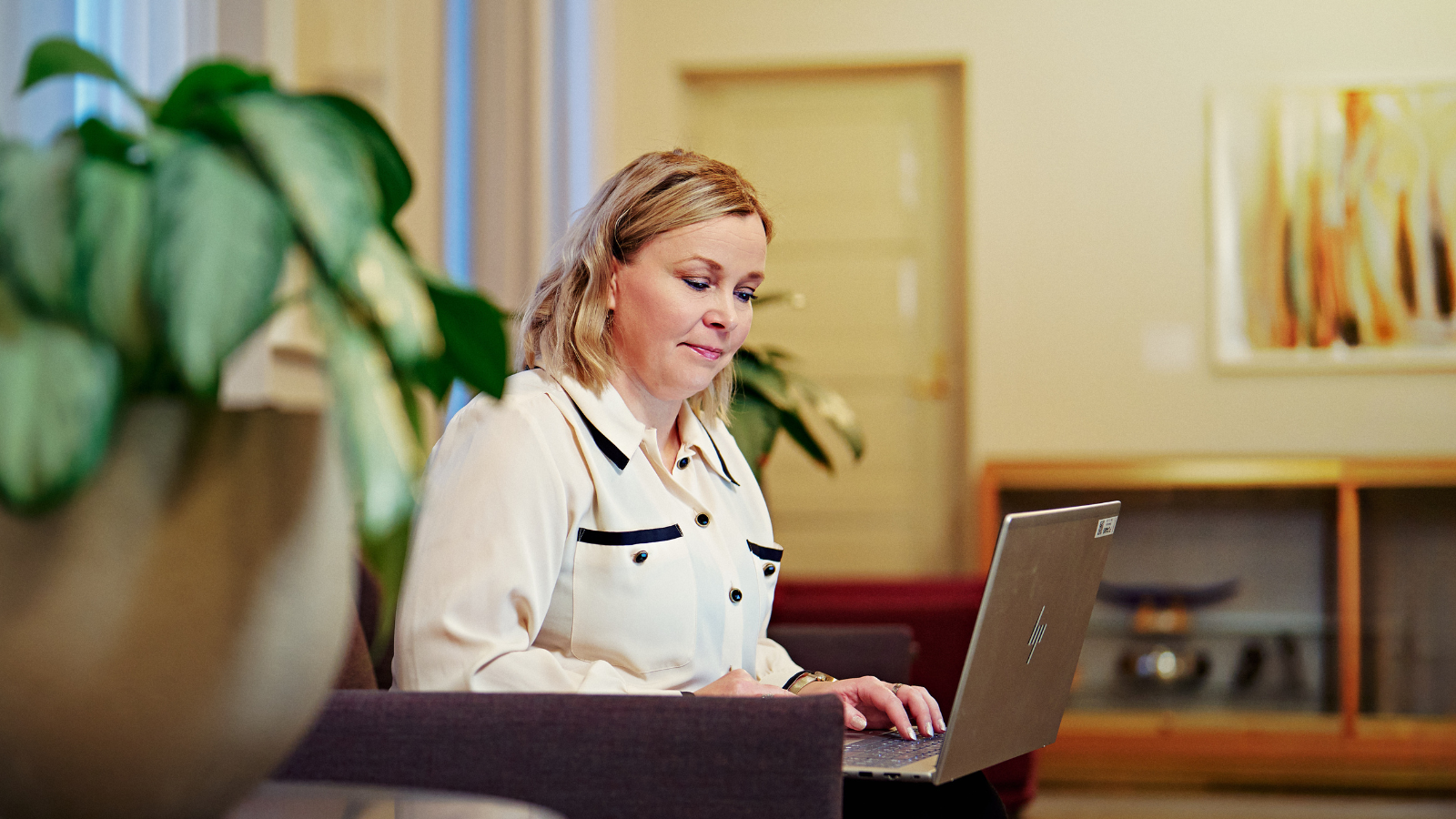
Photo: Anna-Kaisa Puusaari, photographer Mikko Törmänen/ University of Oulu
The essence of change: Oulu trained its organization to think about mental health in a new way
The introduction of the Therapies to the Forefront model was not just an internal occupational health process. The city of Oulu understood right from the start that the change would affect the entire organization and, above all, the supervisors, whose approach to employees determines the success of early support.
– The courage to talk about these issues does not come from a single internal news item. Supervisors also need tools to talk about mental health in everyday situations. We have built this together, in small steps and through repeated communication, says Puusaari.
Managers are also supported in concrete situations: how to raise concerns and inform employees about low-threshold options, how to guide employees to fill out the Therapy Navigator form, and how to take care of their own well-being as managers. Training supervisors for this role is one of the keys to success in Oulu.
– Without the early intervention and support of supervisors, timely guidance cannot be provided, explains Puusaari.
Hyrynkangas also sees the role of supervisors as crucial.
– The supervisor is often the first to notice a change in an employee's well-being, but occupational health services are responsible for ensuring that professional support is provided at the right time. Without smooth cooperation, these two perspectives remain separate, and the employee's situation may go unnoticed.
The change also required supervisors to recognize boundaries more clearly than before. Mental health issues can and should be discussed, but supervisors do not need to be therapists.
Everyday talk about mental health
As part of the change, Oulu created entirely new structures in which mental health support remains a visible and integral part of everyday life.
– New employees now receive information about mental health support models during their orientation, which means that mental well-being has become part of the culture from day one. In addition, topics such as well-being at work, work ability management, and occupational safety are discussed regularly, for example, in meetings between supervisors, so that these issues remain visible and do not get lost in the hustle and bustle of everyday life, Puusaari explains.
The results are already visible: mental health absences are clearly declining
Although the new operating model has only been in place for just over six months, the results are promising. Mental health-related sick leave has fallen by an estimated 10%. Employees have been able to get help with their situation at an earlier stage.
– The importance of communication is clear, as the number of initial referrals has already doubled since the start. Naturally, with the increase in initial referrals, the number of guided self-care programs has grown steadily, providing our staff with tools for independent work with mental health challenges and support tailored to their needs, Puusaari explains.
The effects of the cultural change are also visible in our daily work. Supervisors talk more openly about mental health, employees find it easier to seek help, and treatment pathways are now smoother than before.
– This has increased interaction, strengthened work ability management, and brought mental health support genuinely closer to everyday situations. This is not a separate trick, but an essential part of every manager's work, Puusaari summarizes.

Photo: Mikko Törmänen
Anna-Kaisa's tips for other organizations on utilizing the Therapies to the Forefront model
1. Coach your managers
Train, discuss, spar, and continue this regularly. New models take time to take root.
2. Create structures that keep the topic visible
Discussion forums, occupational well-being forums, and repeated messages support cultural change.
3. Emphasize in your communications: The right amount of help for the right amount of care
In the Therapies to the Forefront model, occupational health nurses' professional skills shine. They support self-care programs, know how to guide people along the care pathway when the situation requires it, and are a natural link to the employer.
4. Cooperation is key
Occupational health, supervisors, and HR must work seamlessly together. No one can handle this alone.
5. Don't wait for perfect processes – just get started
We'll know more in a year, and we'll see more lasting effects in three years. The main thing is to get started.
Read more Occupational Health articles
-
 25.05.2026 | Article
 -
 25.05.2026 | Article


