
Sick leave on the decline: what does the data for 2025 tell us about the work ability of Finns?
Terveystalo's Näin Suomi voi* material reveals several positive changes in Finnish working life. In 2025, Finnish employees had fewer sick days on average than before, and more and more people got through the whole year without a single day of absence. Absences due to mental health issues, which had been a cause for concern for a long time, also decreased significantly. The data shows a change in work ability management: problems are addressed earlier and returning to work is supported more actively than before.

According to data from Terveystalo, sick leave among Finnish workers continued to decline in 2025. The average number of sick leave days per person was 9.7, and as many as 44 percent of employees did not take any sick leave during the year.
– This trend is a continuation of previous years, but at the same time, the structure of absences has changed. In particular, the proportion of long-term sick leave has decreased. Based on the data, challenges related to work ability are being addressed earlier and in a more systematic manner, says Simo Taimela, Chief Epidemiologist at Terveystalo.
Sick leave decreased from the previous year in almost all major diagnosis groups. Absences due to musculoskeletal disorders continued their downward trend, which has been ongoing for several years, and absences related to accidents also decreased. Similarly, sick leave due to infectious diseases decreased, even though the influenza virus was aggressive in 2025 and caused longer absences than in previous years, especially in the spring and at the end of the year.
– The decrease in absences due to infectious diseases in particular does not directly indicate that employees are getting sick less often, but is also influenced by the fact that in more and more companies, supervisors can grant short absences, for example, when an employee has the flu. Occupational health is being utilized more appropriately, as minor illnesses are increasingly being treated at home without visits to healthcare providers, Taimela explains.
Occupational health can be utilized more appropriately, as minor illnesses are increasingly being treated at home without visits to healthcare providers. ”
Simo Taimela

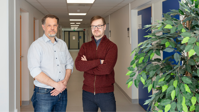
Photo: Simo Taimela, Chief Epidemiologist at Terveystalo
Mental health absences down by as much as 7% from the previous year
One of the most significant findings in the 2025 data relates to mental health. Mental health-related absences decreased from the previous year in all absence length categories except for the longest absences, which lasted more than 90 days. The proportion of people absent for mental health reasons also decreased by one percentage point. Absences related to neurotic disorders, such as anxiety, which had been on the rise for a long time, began to decline in all age groups. At the same time, absences related to mood disorders, such as depression, continued to decline steadily.
– This development is in line with the fact that mental health support has been successfully made a more visible part of everyday life in the workplace. At Terveystalo, our goal was to reduce mental health-related absences from work by 5% over the past year, and we knew that this would require not only our own measures but also strong participation from employers. We exceeded our target, which shows that together we have found better ways to support work ability in cases of mental health problems. Low-threshold services, earlier identification and referral to treatment, as well as measures targeting work and individuals seem to have a positive effect, says Jukka Pitkänen, Chief Physician at Terveystalo Occupational Health.
We exceeded our savings target of 5% by a wide margin. Together, we have found better ways to support work ability in cases of mental health problems. Low-threshold services, earlier identification and referral to treatment, as well as measures targeting work and individuals, seem to have a positive effect. ”
Jukka Pitkänen
Young minds in working life feel just as well as other age groups
Terveystalo's Näin Suomi voi material consists of sick leave data from all Terveystalo occupational health customers over several previous years. The data shows that mental health-related absences among working-age people are most common among middle-aged employees, while those under 30 have more moderate rates.
– When talking about the mental health of working-age people, the mental health problems of young people are often highlighted as the biggest challenge in working life. Based on our results, it seems that young people who face challenges may not even end up in working life. It is important to ensure that they have access to support before they start their careers in order to avoid exclusion, Taimela explains.
Absences are clearly less common among people over the age of 60, which can be explained in part by selection in working life.
– It is noteworthy that the clearest decline in mood disorders is concentrated in the over-50 age group. According to the KEHA Center's employment review, the economic downturn has increased unemployment in all age groups, with youth unemployment and unemployment among people over 50 increasing in particular. The sharp decline in mood disorders among people over 50 may therefore also be related to the fact that these individuals have moved further away from working life than before, Taimela suggests.
Based on our findings, it appears that young people facing challenges may not even end up entering the workforce. ”
Simo Taimela
Active work ability management has accelerated the reduction in long-term absences
The proportion of employees with more than 30 days of absence fell by 4 percent. At the same time, Terveystalo saw a 49% increase in recommendations for replacement or lighter work or partial sick leave.

Photo: Jukka Pitkänen A preventive approach aims to address work ability issues earlier and before they become prolonged. In addition, work is modified and lightened so that everyone can better keep up with their daily routines.
– We have trained both our own staff and our customers' supervisors to pay attention to remaining work ability, because we know that work rehabilitates. When the issue is approached by looking at opportunities rather than limitations, it is possible to find a solution that allows the employee to continue working with partial work ability. As a result, the return to work is accelerated and the risk of long absences is reduced. This benefits both the employee and the employer and supports the functioning of the entire work community, Pitkänen explains.
* Näin Suomi voi
Terveystalo has analyzed data collected in Finland's largest integrated patient information system on factors affecting the health and well-being of Finns. Every year, the system collects data on the health care visits of several million Finns and the occupational health care of approximately 700,000 working-age Finns from various industries across Finland. The aim of the This is how Finland can analysis is to promote the well-being of Finnish society as a whole by highlighting observations and trends that are significant in terms of public health.
Read more occupational health articcles
-
 25.05.2026 | Article
 -
 25.05.2026 | Article


