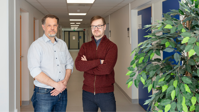
Terveystalo and the Eating Disorder Association working together towards responsible and effective solutions
Terveystalo and the Eating Disorders Association have agreed on a cooperation that aims to influence the structures that predispose to disordered eating behaviour in health care and working life and to offer clients multidisciplinary treatment with a positive approach to eating disorders.
– Our skills complement each other. We have a broad perspective on the health of the working age population and a strong multidisciplinary team of professionals to support our clients. The Eating Disorder Association, on the other hand, has invaluable expertise in supporting responsible lifestyle changes and sustainable weight management, as well as in identifying eating disorders. Nutrition and eating habits play an important role in well-being, overall well-being and work capacity, but lifestyle counselling must not feel pressurised or contain distorted values to avoid creating new problems. By working together, we are boosting Terveystalo's staff's expertise in an eating disorder-sensitive approach, which will help our professionals to provide effective and sustainable disease prevention and treatment and to take care of Finns' ability to work," says Ilse Rauhaniemi, Terveystalo's Chief Occupational Health Physician.
Eating disorders affect people of all ages
As many as one in ten Finns has suffered from an eating disorder. Of these, only one in three is identified by the health service and one in four has received targeted treatment for their eating disorder. Research also shows that the number of different eating disorders is constantly increasing. Contrary to popular belief, eating disorders affect people of all ages.
Eating disorders are serious mental health problems that have a significant impact on quality of life and ability to work. They can manifest themselves in working-age people as mood or fatigue symptoms, concentration problems or body-food relationship challenges, making it difficult to maintain a healthy lifestyle and to manage their own well-being and well-being at work and in their leisure time. An eating disorder with its associated symptoms can be a drain on resources as the mind dwells on eating-related thoughts.
– Everyone has the right to a healthy mind and body. We hope to work with health professionals to develop solutions to better identify and prevent eating disorders. We also believe that we will find ways to improve the quality of care for eating disorders. People of all sizes have the right to be treated in an eating disorder-sensitive way," says Kirsi Broström, Executive Director of the Eating Disorder Association.
– For Terveystalo's customers, the cooperation means safer and more effective lifestyle counselling, which we use to increase our customers' overall well-being and ability to work and function. Effective lifestyle counselling and sustainable body or weight management do not have to be mutually exclusive, emphasises Rauhaniemi.
Read more occupational health
Digital trends in healthcare 2026: The ability to leverage artificial intelligence comprehensively will become a key success factor
The accelerating development of technology and artificial intelligence doesn’t just mean new innovations in healthcare; it forces us to rethink the entire operating logic of the sector, says Ilari Richardt, Head of Digital Services at Terveystalo.
Healthy Work Life Barometer 2026: Growing workload poses a challenge to the workplace; the solution lies in a sense of community
The Healthy Working Life Barometer 2026* reveals that 48% of business decision-makers consider the Finnish working life to be healthy. This is an encouraging turn for the better, as it represents a 5-percentage-point increase from the previous year. At the same time, the barometer reveals a new normal in the workplace: as many as 80% of respondents feel that the Finnish workplace is more fast-paced and stressful than ever before.
Healthy Work Life Barometer 2026: A positive trend in health, but a growing gap in views on humanity between top management and other employees
The Healthy Working Life Barometer 2026* reveals that 48% of business decision-makers consider the Finnish working life to be healthy. This marks an encouraging shift for the better, as it represents a 5-percentage-point increase from the previous year. Although the overall picture of workplace health has improved, experiences regarding management’s proactiveness and the humanity of everyday work vary, so polarization between roles is on the rise.
Occupational health Therapies at the Forefront – operating model reformed mental health support for staff in Oulu
Mental health and behavioral disorders were a cause for concern in the city of Oulu. Sick leave was on the rise, and the phenomenon was evident not only in statistics but also in the everyday life of work communities. When the Therapies to the Forefront operating model became available for occupational health services, Oulu seized the opportunity. The goal was to build a completely new way of thinking about mental health support and to provide tools for every employee to promote their own well-being and coping. The achievements of the first six months show that the solution was the right one: a 10% decrease in mental health absences is the result of a comprehensive cultural change.
Terveystalo succeeded in its ambitious goal of reducing mental health-related absences: savings amounted to approximately 100,000 working days and EUR 42 million.
At the beginning of 2025, Terveystalo committed to achieving a significant reduction in mental health-related sick leave among its occupational health customers. Focusing on the prevention of mental health disorders and rapid, effective treatment yielded results that exceeded the target. Mental health-related sick leave fell by 7%, which resulted in a total of approximately 100,000 additional healthy working days and savings of nearly EUR 42 million for occupational health customer companies.
Sick leave on the decline: what does the data for 2025 tell us about the work ability of Finns?
Terveystalo's Näin Suomi voi* material reveals several positive changes in Finnish working life. In 2025, Finnish employees had fewer sick days on average than before, and more and more people got through the whole year without a single day of absence. Absences due to mental health issues, which had been a cause for concern for a long time, also decreased significantly. The data shows a change in work ability management: problems are addressed earlier and returning to work is supported more actively than before.